
Hubbard Brook
Welcome to Hubbard Brook Experimental Forest in New Hampshire’s White Mountains! Since 1955, scientists have studied this 7,800-acre forest to understand how water, soil, and forests work together to create a thriving ecosystem. They focus on watersheds, areas where all the rain and streams flow to the same river, to track how humans and natural events affect the environment. Since 2012, WaterViz has transformed data from these watersheds into visuals and music.
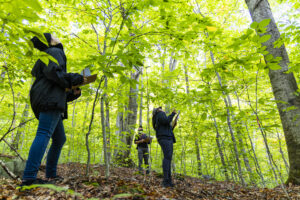
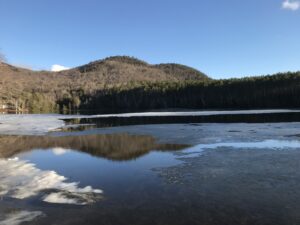
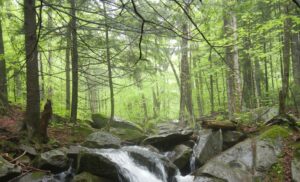
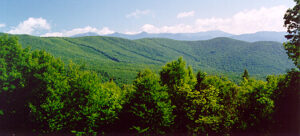
Scenes from Hubbard Brook


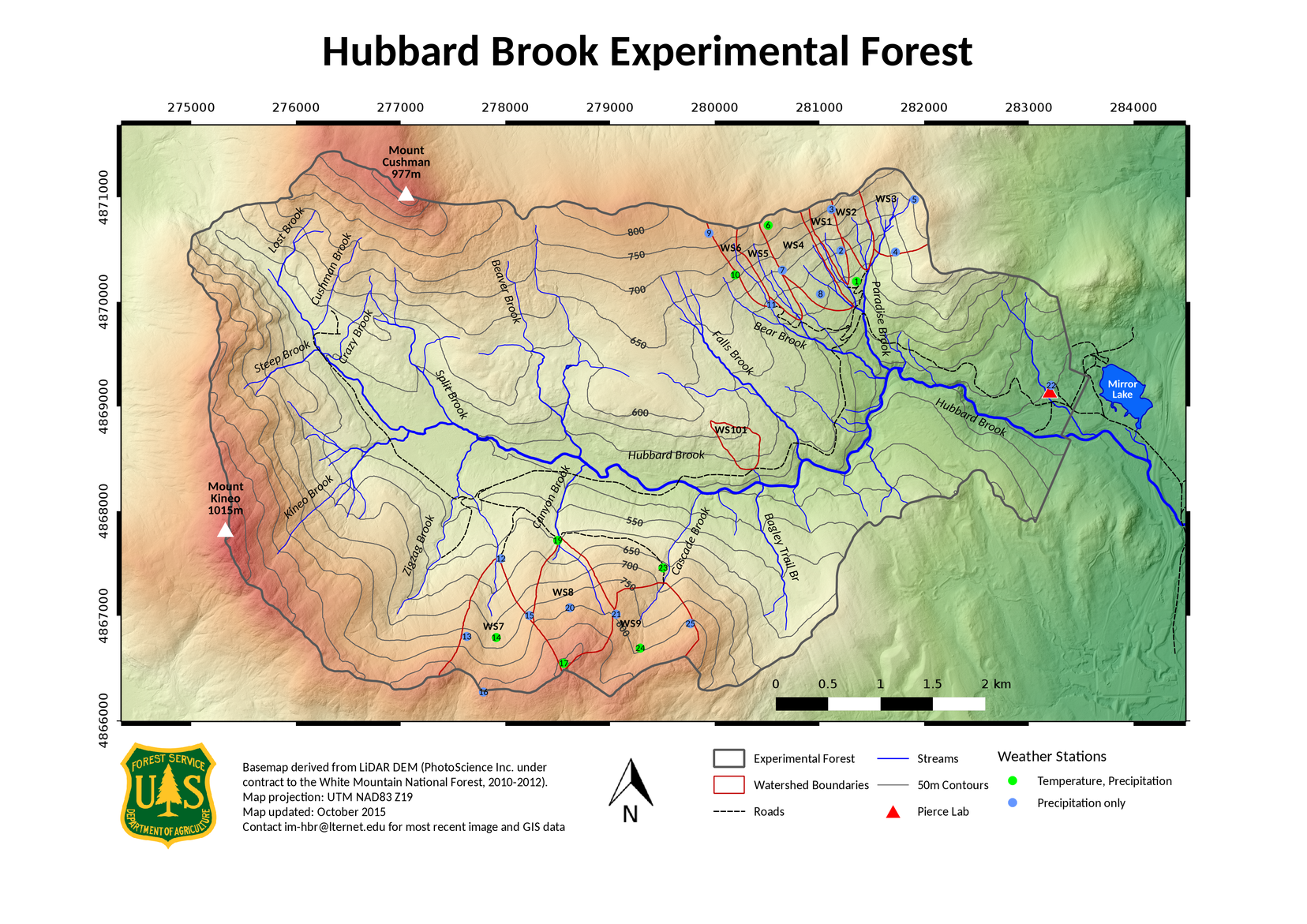
Map of the Forest
Hubbard Brook sits in a bowl-shaped valley with nine small watersheds that scientists study to see how water and chemicals move through the landscape. These watersheds are scattered about a large network of streams, from small channels to the larger Hubbard Brook, which flows south. Mirror Lake sits just outside the boundary.
Did You Know That…? Learn About Hubbard Brook’s Biggest Discovery
• Did you know that acid rain was discovered at the Hubbard Brook Experimental Forest?
In the 1970s, scientists at Hubbard Brook noticed something concerning: rain and snow were unusually acidic. They discovered that the acidity came from air pollution from power plants and cars. This ‘acid rain’ was harming streams, soils, and forests. Their discovery helped the United States pass stronger laws to reduce air pollution.
• Did you know that acid rain washed away nutrients that trees need to grow?
One of the most surprising discoveries at Hubbard Brook was that acid rain drained calcium, a vital nutrient, out of the soil. This helped explain why some forests weren’t growing as well. Scientists tested adding calcium back, and the forest got healthier.
• Did you know that rain and streamwater used to be full of acid, but now they’re getting cleaner?
Thanks to cleaner air laws, acid rain has decreased. Scientists at Hubbard Brook showed that rain and streams have gotten cleaner, helping forests and streams recover from decades of pollution.
Did You Know That…? More Surprising Discoveries from the Forest
• Did you know that warmer winters are hurting forests?
Scientists at Hubbard Brook discovered that warmer winters and less snow make the ground freeze much deeper than it used to. This can damage tree roots and slow the growth of the forest. It also changes when insects hatch and when birds begin building their nests. All of these changes show how climate change affects the entire forest ecosystem.
• Did you know that songbirds need more than just trees?
For more than 50 years, scientists at Hubbard Brook have studied migratory birds such as warblers and flycatchers. They found that climate, food, and the structure of the forest all play a role in how many birds a forest can support. Some species declined in the past, but thanks to long-term research, some bird populations are now stabilizing or even beginning to recover. The forest continues to sing!
• Did you know that trees help the flow of water and nutrients?
Scientists at Hubbard Brook once asked a big question: What happens if you cut down all the trees in a forest? Without trees, streams began to flood and important nutrients like nitrogen were washed out of the soil. As new trees grew back, the ecosystem started to recover in just a few years. This experiment showed how forests regulate water and nutrients and proved just how strong and resilient they can be.
• Did you know that Hubbard Brook pioneered a new way to study ecosystems?
In the early 1960s, scientists at Hubbard Brook developed a new way to study forests called the small watershed approach. By observing how water moves through a single, contained area, they were able to see how the forest ecosystem changes over time. This method was so successful that scientists around the world still use it today!
Want to learn more? Visit: https://hubbardbrook.org/