
WHY WATER, WHY NOW
Clean and plentiful water is one of society’s most valued natural resources, yet it is increasingly threatened by a changing climate, land-use change, growing human demand, and pollution. WaterViz offers a new way to envision how water moves through a small, upland forested watershed by revealing its inputs, outputs, and storage in real time. By making these hidden processes visible, WaterViz encourages deeper understanding, connection, and care for this essential resource.
OUR MISSION
Our Mission is to make the make the dynamics of the water cycle visible and understandable by translating real-time environmental data from a forested watershed into immersive visual and sonic experiences.
WHAT IS WATERVIZ?
WaterViz represents the nexus of hydrologic science, visual art, music, and information design. It is an immersive, data-driven experience that transforms scientific measurements into dynamic visual and sonic representations of the water cycle.
HOW WATERVIZ WORKS
Hydrologic data are captured from a small watershed at the Hubbard Brook Experimental Forest in the White Mountains of New Hampshire using an array of environmental sensors. These data are transmitted in real time and used to drive a computer model that calculates the major components of the water cycle for the catchment. Model outputs then animate the visualizations and sonifications, reflecting the hydrologic processes unfolding at that moment in time.
Artists in Residence
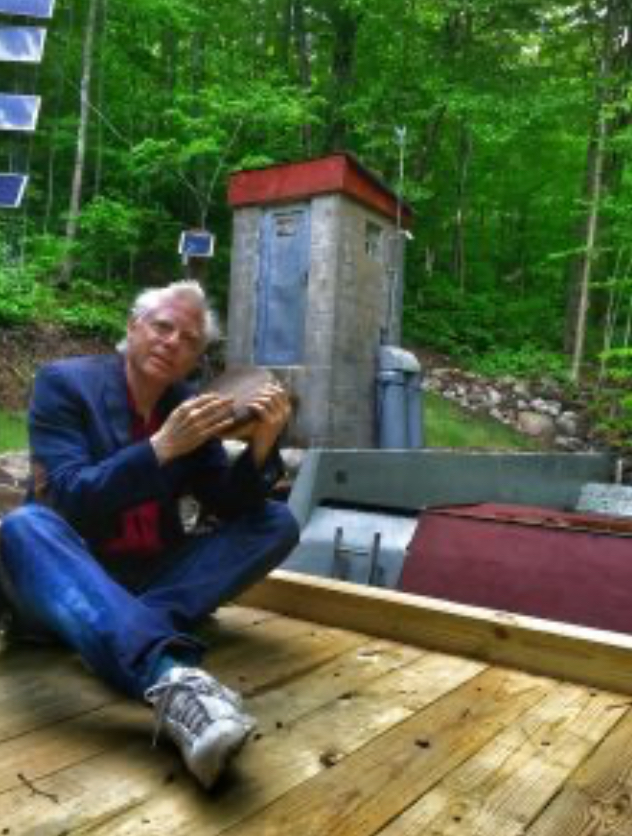
Marty Quinn
Marty Quinn is a composer and data scientist, and founder of the Design Rhythmics Sonification Research Lab. For over 25 years, he has explored how data can be perceived through music and visualization. His works include The Climate Symphony, Water Ice on Mars, and Touch the Future: Hear the Climate Change, as well as interactive projects for the visually impaired. He has been artist-in-residence at the Hubbard Brook and H.J. Andrews Experimental Forests, creating sonifications for environmental projects like WaterViz and HydroScape.
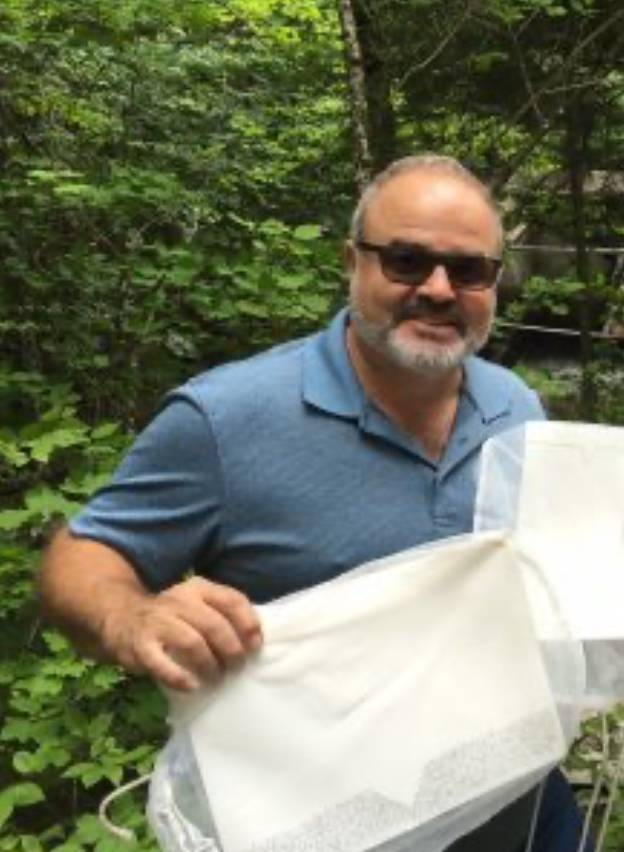
Xavier Cortada
Xavier Cortada is an American artist whose work has been exhibited across the Americas, Europe, Asia, Antarctica, and Africa. He is a Professor of Practice in the Department of Art and Art History at the University of Miami, with a studio at Pinecrest Gardens where he serves as Artist-in-Residence. Cortada’s practice blends art and science, often engaging scientists and the public in participatory projects. He has created site-specific works at the Hubbard Brook and H.J. Andrews Experimental Forests, including WaterViz, Hubbard Brook Water Paintings, Wind Words, and CLIMA 2016.
Water Cycle Visualization Story
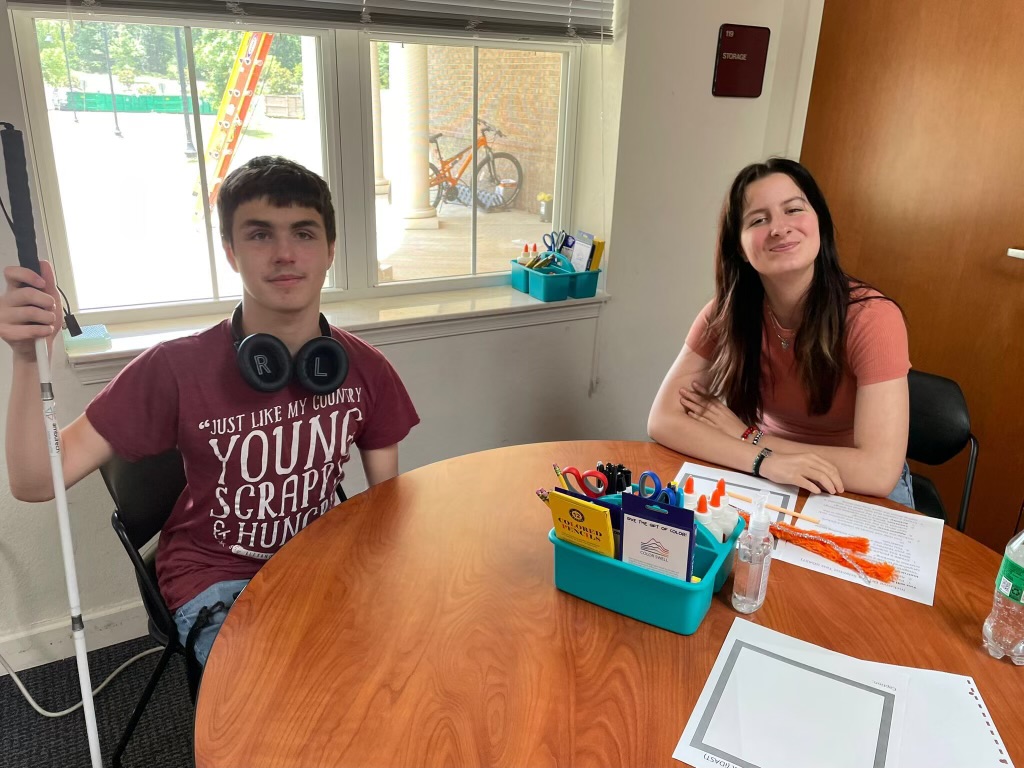
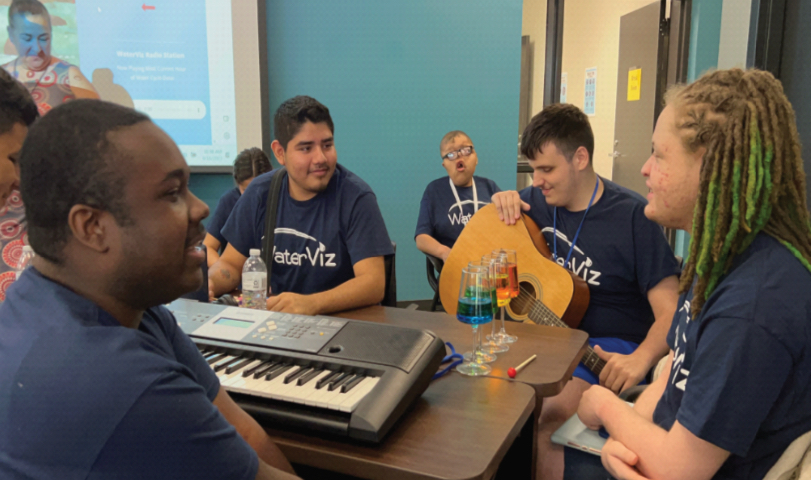
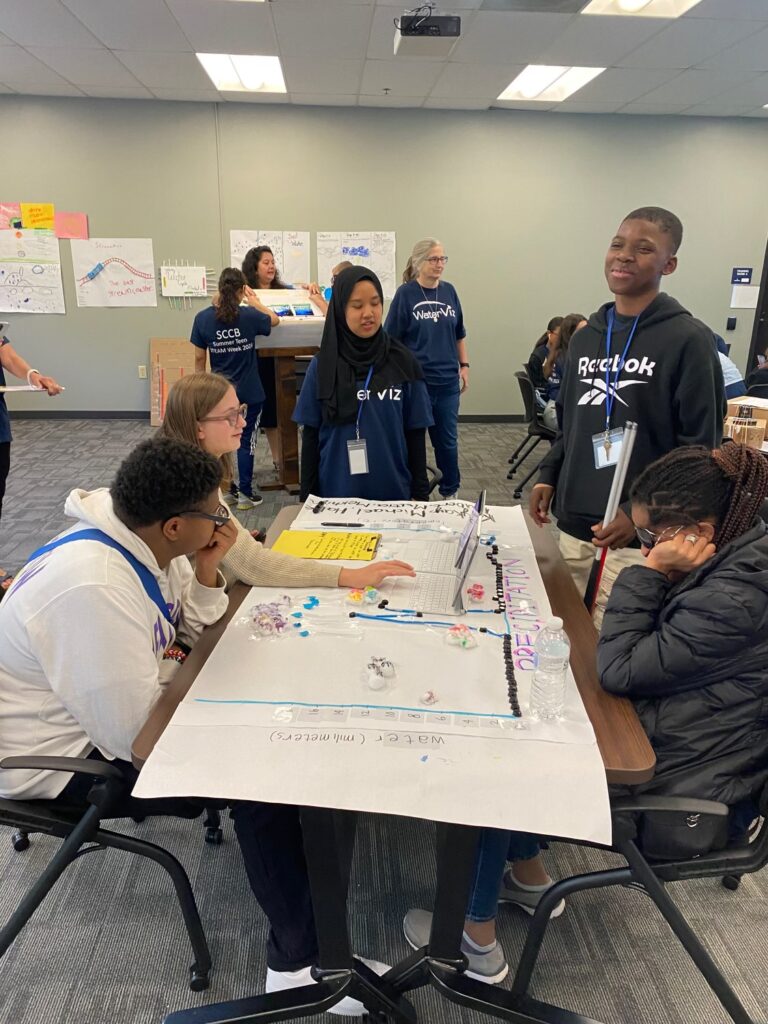
STEM Camp Experiences
WaterVizzy

WaterVizzy is a kind of GPT, specially trained on a specific knowledgebase to talk about the WaterViz, water, forests, and the Hubbard Brook Experimental Forest. It is forbidden from making up facts, going outside its knowledge base to the broader internet for information, or answering any questions outside its scope of knowledge.
The WaterViz Team
This project involves the collaboration of many talented participants, each of whom bring their unique abilities to create an artistic representation of ecological processes occurring at Hubbard Brook.
Lindsey Rustad, Project Lead, USDA Forest Service, Durham, NH.
Mary Martin, Web Programing and Data Management, University of New Hampshire, Durham, NH.
Xavier Cortada, Visual Artist, Professor of Practice in the Department of Art and Art History at the University of Miami.
Marty Quinn, Sonification Designer/Composer, Design Rhythmics Sonification Research Lab.
Mary Robbins, Teacher of the Visually Impaired, Columbia, SC
Sarah Garlick, Science Policy and Outreach, Hubbard Brook Research Foundation.
Michael Casey, Center for Cognitive Neuroscience, Principal Investigator for “Music, Health, and Medicine,” a Medical Humanities Network project.
Amey Bailey, USDA Forest Service, Hubbard Brook Experimental Forest, Woodstock, NH.
Scott Bailey, USDA Forest Service, Hubbard Brook Experimental Forest, Woodstock, NH.
Clara Chaisson, Outreach and Communications, Hubbard Brook Research Foundation.
Ivaylo Dzhedzhev, Visualization Developer, Simosol Oy, Finland.
Mark Green, Hydrologic Modeling, Plymouth State University, Plymouth, NH.
Alison Magill, Web Design and Content Management, University of New Hampshire, Durham, NH.
Jussi Rasinmäki, Visualization Developer, Simosol Oy, Finland.
Fred Swanson, Emeritus Scientist, USDA Forest Service, HJ Andrews Experimental Forest, Corvallis, OR.
Sarah Thorne, Education Specialist, Gilmanton, NH.
Tina Herzberg, Professor & Director of Visual Impairment, University of South Carolina Upstate
Joanne Goelzer, High School Science Educator
Dan Scarpati, Middle School Science Educator
Open Access, Website Development Team: Amarachi Obi, Catherine Simmons, Izzy Irizarry, Yasmine Baki and Michelle Obi
Acknowledgements
The following organizations have been instrumental in creating WaterViz, and we thank them for their generous support:
USDA Forest Service
National Science Foundation DEB-1548175
NSF EPSCoR New Hampshire
National environmental education foundation greening stem award
Lyda Hill Foundation if/then minigrant award
We also acknowledge the contributions of numerous people, including:
Anonymous Donors
Denise Blaha
Juan Carlos Espinosa
Irene Goodman
Gajan Sivandran
Jacquelyn Wilson